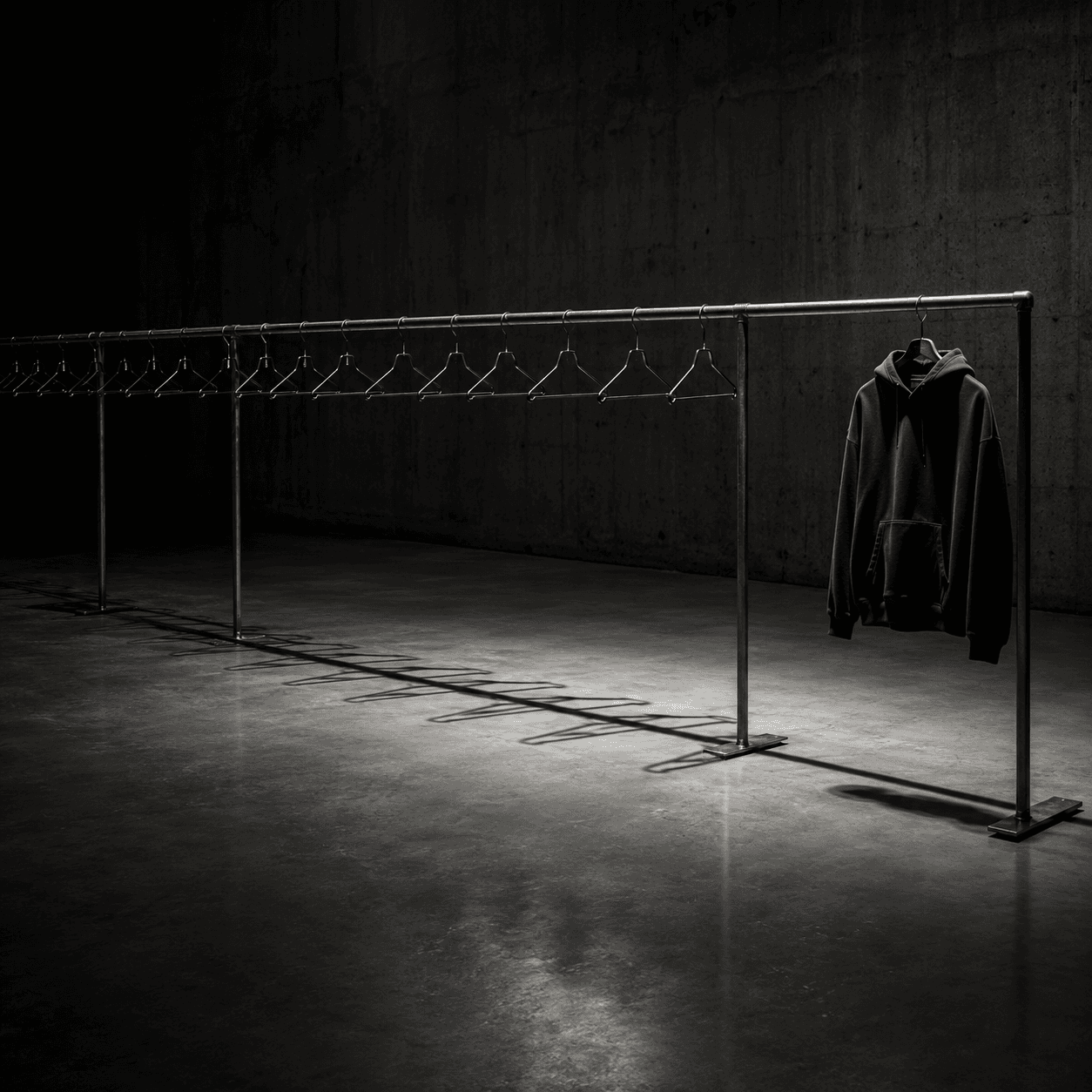
Limited drop streetwear started as a workaround. Independent brands could not compete with mass-market scale, so they made fewer pieces and sold them on a release schedule. However, what looked like a constraint became the model. Today, limited drop streetwear defines how the most respected brands operate — even when they could produce at scale, they choose not to. This piece breaks down why the drop model works, what it means for buyers, and how to navigate it without overspending.
The short version: limited drop streetwear creates conditions that mass-market apparel cannot. Better quality. Cleaner brand identity. Smaller environmental footprint. Stronger community. Therefore, the model is not going anywhere — it is going deeper.
What Limited Drop Streetwear Actually Means
A drop is a discrete release of pieces, available for a limited window or until inventory sells out. Limited drop streetwear refers to brands that operate exclusively on this model. They do not run rolling inventory. They do not restock. Once a drop closes, it stays closed.
For instance, a brand might announce Drop 003 on a Tuesday at ten in the morning, sell through two-fifty hoodies in three days, and close the run. Three months later, Drop 004 is something different — different cut, different fabric, different color. The pattern repeats.
In contrast, mass-market apparel runs a season catalog with constant restocks. The same hoodie sits on the site for nine months. Markdowns hit at the end of the cycle. As a result, the piece feels disposable from day one.
Why Limited Drop Streetwear Builds Better Product
Scarcity changes the math on production. When a brand makes five hundred pieces instead of fifty thousand, every unit gets more attention. The fabric choice can be premium because the volume is small. The construction can be slow because the timeline is fixed. Quality control can be human because the team can actually inspect every piece.
Additionally, limited drops let brands experiment. A standard apparel cycle has to play it safe — the catalog needs to sell across nine months. A drop only needs to sell across three days. Therefore, the brand can take risks on cut, fabric, or graphic that a mass producer cannot.
For example, a four-eighty GSM heavyweight hoodie at a hundred and forty-eight dollars only works if you can sell five hundred in a week. The same brand could not maintain that price point at fifty thousand units. Limited drop streetwear lets the math support the craft.
The Buyer Side: Why Customers Stick With Drops
Customers are not stupid. They know they could buy something else for less. So why does limited drop streetwear keep growing? A few reasons:
- The piece does not get diluted. When the run is small, you do not see your hoodie on every kid at the mall.
- The brand does not bait-and-switch. No "as seen on Instagram" version that arrives feeling cheaper than the photo.
- The wardrobe stays curated. You buy two pieces a year instead of two pieces a month.
- The community matters. Drop subscribers know each other through the calendar. There is shared anticipation.
Furthermore, the resale market provides a safety net. Pieces from respected limited drop streetwear brands hold or gain value. A hundred-and-forty-eight dollar hoodie sold three years ago can still trade hands at a hundred and twenty. That kind of resale floor only exists on scarce product.
How to Navigate Limited Drop Streetwear as a Buyer
The model rewards patience and punishes impulse. Use these moves to buy well:
- Subscribe to drop alerts. Email lists usually go out before public posts. Subscribers get the head start.
- Decide before the drop, not during. Read the lookbook, study the lineup, pick the piece — then wait for the open. Do not browse and impulse.
- Buy the staple first. The hoodie or tee you would wear regardless of the drop. Skip the graphic-heavy one-off until you trust the brand.
- Check shipping cutoffs. Limited drops sometimes ship in waves. Know when your size will leave the warehouse.
- Skip the resale if you can. Resale prices reflect speculation, not value. Patience usually beats premium.
In addition, build a short list of two or three brands whose drops you actually want. Trying to chase every label leads to wardrobe sprawl. Limited drop streetwear works best with focus.
Sustainability: The Quiet Argument
The fashion industry produces around one hundred billion garments per year. Most never sell, and a huge percentage end up in landfills. Limited drop streetwear is a structural response to that problem.
Smaller runs mean smaller waste. A five-hundred-piece drop that sells out generates almost no excess inventory. Compare that to a mass-market hoodie that runs fifty thousand units, sells thirty-five thousand, and lands the rest in clearance racks or incinerators. The difference is not a marketing claim — it is a math problem.
In addition, limited drop pricing supports better materials. A hundred-and-forty-eight dollar heavyweight hoodie can use four-eighty GSM organic cotton. A forty-eight dollar mass-market hoodie cannot afford that input. Therefore, the buyer who picks fewer, better pieces ends up with a smaller environmental footprint and a wardrobe that lasts longer.
What Limited Drop Streetwear Means for the Long Term
The drop model is not a phase. It is the maturation of how independent brands compete. Mass-market companies are now mimicking the format — surprise releases, capsule collections, limited-time stunts. However, the difference is intent. A real limited drop streetwear brand operates this way because it is the best way. A mass producer dressing as a drop brand operates this way for marketing leverage.
Customers can tell the difference. As a result, the loyalty splits along that line. Real drops earn community. Fake drops earn one-time conversion.
Furthermore, the next generation of brands is starting drop-first by default. They never had a season catalog to abandon. Limited drop streetwear is their native operating system, not a strategy. Consequently, the model will keep refining as those brands mature.
Final Take on Limited Drop Streetwear
Limited drop streetwear works because it aligns the brand's incentive with the customer's interest. Smaller runs mean better pieces. Better pieces mean longer wardrobes. Longer wardrobes mean less waste, less hype anxiety, more pride of ownership. The model is not a trick or a trend — it is a more honest way to run a clothing business.
For buyers, the playbook is simple. Pick the brands whose drops you respect. Subscribe to the alerts. Buy the pieces you actually want. Skip the rest. The system works in your favor when you stop trying to chase everything.
Mr. Exotixx Drop 001 is live now. Two pieces. Limited run. Once they close, they archive.